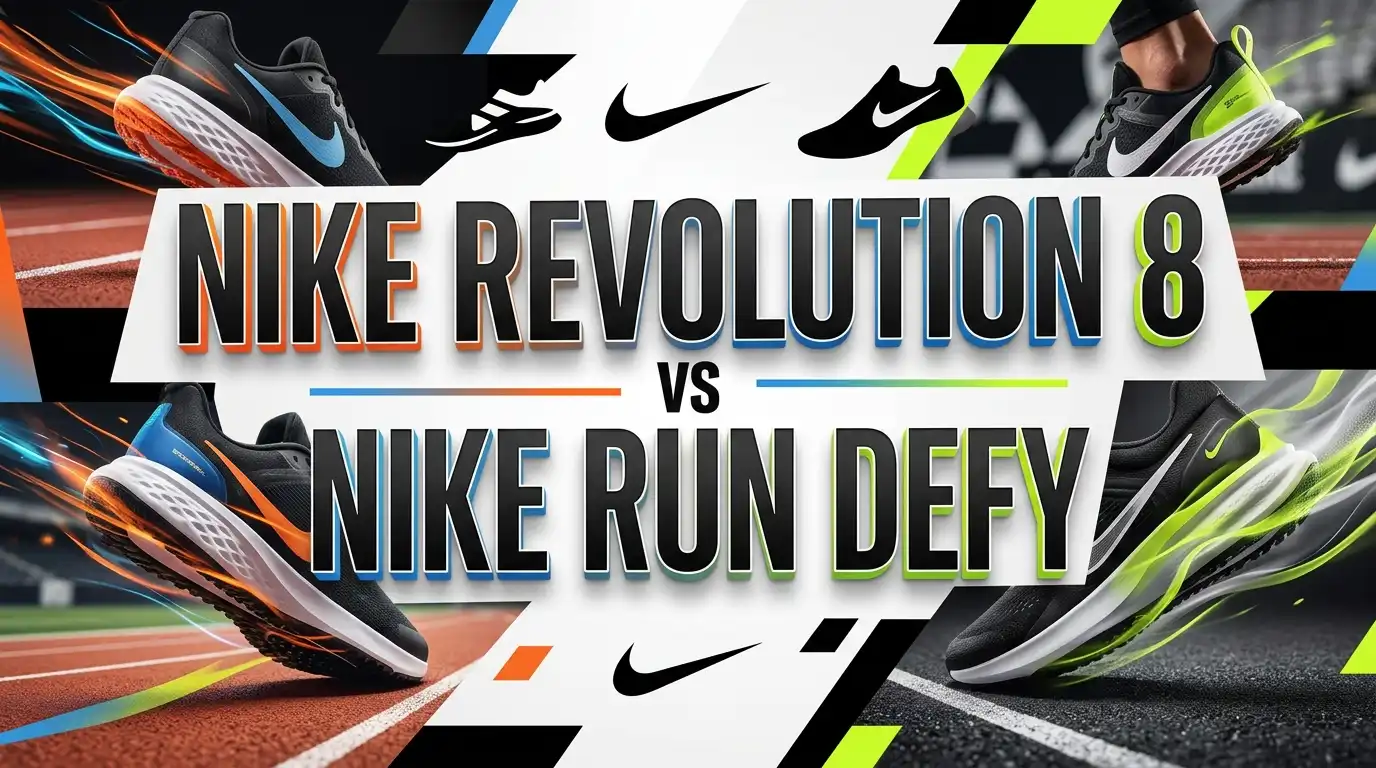
Nike Revolution 8 vs Nike Run Defy: Which Shoe Deserves Your Money?
You want a good running shoe. You want a Nike running shoe. But you do not want to spend $150 or more. That leaves you with two popular picks: the Nike Revolution 8 and the Nike Run Defy.
Both shoes sit in Nike’s budget-friendly range. Both shoes promise foam cushioning, breathable mesh uppers, and reliable road grip. So which one is the better buy for your feet?
This post breaks down every detail that matters. I compare cushioning, weight, fit, durability, outsole grip, and overall value. I also share the pros and cons of each shoe so you can pick the right one fast. Read on to find the shoe that fits your goals and your budget.
Key Takeaways
- The Nike Revolution 8 weighs about 9.3 oz (264g) for a men’s US 10. The Nike Run Defy weighs about 9.9 oz (281g) for a men’s US 10. The Revolution 8 is the lighter shoe, and that difference can matter over long distances. Lighter shoes often reduce leg fatigue during runs.
- Both shoes use a 10 mm heel-to-toe drop. This drop suits heel strikers and feels stable for beginners. It also creates a smooth transition from heel to toe during each stride. Most casual runners find this drop comfortable and familiar.
- The Nike Revolution 8 uses a new EVA foam midsole. This foam replaced the old Phylon foam from the Revolution 7. The upgrade brings better shock absorption and better energy return. The Run Defy also uses a foam midsole, but Nike has not given it a specific foam name or technology label.
- Both shoes use breathable mesh uppers. The Revolution 8 has an improved mesh compared to the Revolution 7. The Run Defy also uses mesh for airflow. Both shoes keep feet cool during warm runs and long walks.
- The Revolution 8 retails at about $70. The Run Defy retails at about $60. That $10 gap can matter for budget shoppers. But the Revolution 8 offers more tested cushioning technology for the extra cost. Both shoes deliver strong value in the budget Nike range.
- The Run Defy feels aimed at simple daily comfort. The Revolution 8 feels aimed at light running performance. Your choice depends on whether you want a casual daily shoe or a real entry-level running trainer.
Nike Revolution 8 Overview

- Mesh Upper: The mesh upper offers a comfortable, breathable feel.
- Foam Midsole: The foam midsole delivers intuitive cushioning through comfort-focused rocker geometry.

Last update on 2026-08-27 / Affiliate links / Images from Amazon Product Advertising API
The Nike Revolution 8 is the eighth version of Nike’s long-running budget shoe series. Nike updated the foam from Phylon to a new EVA compound. This change improved shock absorption in the heel from 98 SA to 120 SA based on lab tests. The shoe weighs 9.3 oz (264g), which is 6% lighter than the Revolution 7.
The midsole uses a comfort-focused rocker geometry borrowed from the design language of the more expensive Nike Vomero 18. This gives the shoe a smoother heel-to-toe transition. The forefoot uses flex grooves that help the shoe bend during push-off.
Nike also improved the mesh upper. The new mesh feels softer and allows better airflow compared to the previous version. The tongue is gusseted on both sides, which keeps it from sliding during runs. The heel counter is stiff and supportive. The outsole uses Nike’s classic waffle pattern for road grip.
Pros:
- Lightweight at 9.3 oz for men’s US 10
- Improved EVA foam with better shock absorption and energy return
- Gusseted tongue stays in place
- Strong durability scores for a budget shoe
- Available in wide and extra-wide sizes
Cons:
- Narrow toe box may not suit wide feet in standard width
- Forefoot cushioning feels thin for heavier runners
- Midsole leans firm, not plush
- No reflective elements for night running
- Breathability is moderate, not excellent
Nike Run Defy Overview

- Mesh on upper adds breathability.
- Foam midsole delivers a soft ride.
Last update on 2026-08-28 / Affiliate links / Images from Amazon Product Advertising API
The Nike Run Defy is a newer addition to Nike’s budget running lineup. It combines a foam midsole, a breathable mesh upper, and a waffle rubber outsole. Nike describes it as a shoe ready for runs of all lengths and paces. The men’s version weighs about 281g (9.9 oz) for a US 10. The women’s version weighs about 233g (8.2 oz) for a US 8.
The Run Defy uses a 10 mm drop like the Revolution 8. The foam midsole delivers a soft ride. Flex grooves in the outsole help the shoe bend. The waffle outsole uses increased rubber for better traction and durability on road surfaces.
The upper is simple mesh. It provides airflow and a light feel on the foot. The shoe has a clean, modern look that works for running and casual wear. Nike positions this shoe as a comfort-first daily option for easy runs and all-day use.
Pros:
- Lower price point than Revolution 8
- Comfortable foam midsole for daily use
- Waffle outsole with good rubber coverage
- Clean style that works for casual and running use
- Breathable mesh upper
Cons:
- Heavier than the Revolution 8
- No named or tested foam technology
- Can run narrow for some foot shapes
- Not ideal for speed or tempo workouts
- Less data available on cushioning performance
Cushioning and Midsole Comparison
Cushioning is the biggest factor for most shoe buyers. The Revolution 8 uses a new EVA foam that scored 120 SA in heel shock absorption during lab testing. That is a strong result for a budget shoe. The energy return also improved to 57.1% in the heel and 59.9% in the forefoot. These numbers now compete with shoes priced 30% to 40% higher.
The Run Defy uses a foam midsole, but Nike has not shared specific lab data for it. User reviews describe the ride as soft and steady at easy pace. The foam feels comfortable for walking and light jogging. But it may lack the bounce and responsiveness that the Revolution 8 now offers.
If you care about measurable cushioning performance, the Revolution 8 wins this round. If you just want a soft step for daily comfort without worrying about numbers, the Run Defy does its job well.
Weight and Drop Comparison
Weight affects how a shoe feels during runs. The Revolution 8 weighs 9.3 oz (264g) for a men’s US 10. The Run Defy weighs about 9.9 oz (281g) for the same size. That is a difference of about 17 grams per shoe. Over a long run, this gap adds up.
Both shoes share a 10 mm heel-to-toe drop. This is a standard drop for daily trainers. It supports a smooth heel strike and reduces calf strain for many runners. You will not feel a difference between these two shoes in terms of drop.
If you want the lighter option, the Revolution 8 is the clear pick. The Run Defy is not heavy by any standard, but it does not match the Revolution 8 in this category. For walking and casual use, the weight difference matters less.
Upper and Breathability
Both shoes use a breathable mesh upper. The Revolution 8 features an upgraded mesh compared to its predecessor. Lab tests scored its breathability at 3 out of 5, which means moderate airflow. The mesh is dense enough to last but limits peak ventilation.
The Run Defy also uses a mesh upper for airflow. Reviews describe it as forgiving and comfortable for swollen feet and warm days. The mesh feels soft and reduces pressure points for most foot shapes.
Neither shoe stands out as a breathability champion. Both provide enough airflow for comfortable runs in moderate weather. If you run in very hot conditions, you may want a shoe with larger mesh openings. For standard daily use, both uppers work well.
Fit and Sizing
The Revolution 8 fits true to size for most buyers. However, the toe box is narrow. Lab measurements show a width of 93.1 mm, which falls below the average. The toe box height also measures low at 23.4 mm. People with wide feet should consider the wide or extra-wide options that Nike offers.
The Run Defy also tends to run slightly narrow based on user feedback. Some reviewers on retail sites suggest going up half a size if you have wider feet. The mesh upper offers some give, but the overall shape is snug.
If you have standard or narrow feet, both shoes should fit well in your normal Nike size. If you have wide feet, the Revolution 8 has an advantage because it comes in wider options. Always try shoes with the socks you plan to run in.
Outsole and Traction
Both shoes use Nike’s waffle-pattern outsole. The Revolution 8 scored 0.48 in lab traction tests, which sits near the average for running shoes. Its rubber outsole handles both dry and wet roads well. The outsole lost only 1.0 mm in durability testing, which means it resists early wear.
The Run Defy uses a waffle rubber outsole with increased rubber placement for traction and durability. Nike highlights the flex grooves in the outsole that help the shoe bend during steps. User reviews describe the grip as confident on sidewalks and roads.
Both shoes handle road surfaces and light paths without issue. Neither shoe is built for trails or off-road use. If you stick to paved surfaces, both outsoles deliver reliable traction and long-lasting rubber.
Durability
Durability matters a lot for budget shoes. The Revolution 8 scored 4 out of 5 in toe box durability and 4 out of 5 in heel padding durability in lab tests. The outsole thickness measures 3.3 mm, which is enough to handle regular wear. The mesh is strong because it avoids large ventilation holes.
The Run Defy uses a rubber waffle outsole that should hold up for daily walking and light running. The mesh upper is softer, which may mean it wears faster if you scrape it against rough surfaces. There are fewer lab-tested durability numbers available for the Run Defy.
If you want a shoe with proven long-term durability, the Revolution 8 has more data to back up that claim. The Run Defy should last well for its price, but the Revolution 8 has a tested edge here.
Stability and Support
The Revolution 8 offers decent stability for a neutral shoe. Its heel counter scores 4 out of 5 in stiffness, which helps keep the heel in place. The midsole width measures 90.0 mm at the heel and 112.9 mm at the forefoot. These are balanced numbers that suit most neutral runners.
The Run Defy is also a neutral shoe. Nike does not include any stability posts or medial support features. The foam midsole and flex grooves focus on comfort and smooth bending rather than motion control.
Neither shoe works for runners who need strong stability or pronation control. If your ankles roll inward during runs, consider a dedicated stability shoe like the ASICS GT 1000 series. For neutral runners, both shoes provide enough support for easy miles.
Style and Everyday Use
The Revolution 8 borrows design cues from the Nike Vomero 18. This gives it a modern running look that works for gym sessions, errands, and casual outings. The shoe comes in many colorways on Amazon and Nike’s site.
The Run Defy has a clean, simple design. It looks modern but stays quiet. This makes it a strong pick for people who want one shoe for runs and daily life. The waffle outsole pattern adds a classic Nike touch.
Both shoes transition well from road to street. If you want a shoe that looks good with jeans, joggers, or gym clothes, both options deliver. Style is personal, but neither shoe feels out of place in a casual setting.
Who Should Buy the Nike Revolution 8
- Mesh Upper: The mesh upper offers a comfortable, breathable feel.
- Foam Midsole: The foam midsole delivers intuitive cushioning through comfort-focused rocker geometry.
Last update on 2026-08-27 / Affiliate links / Images from Amazon Product Advertising API
The Revolution 8 fits you if you want a real entry-level running shoe. It works for beginners buying their first running shoe. It works for runners on a budget who still want proven cushioning and durability. It also works for daily wear and gym sessions.
You should pick the Revolution 8 if you value lab-tested performance improvements. The new EVA foam, the lighter weight, and the gusseted tongue all add up. The shoe delivers more running-specific features than the Run Defy at a small price increase. It is the better choice for people who plan to run regularly.
Who Should Buy the Nike Run Defy
- Mesh on upper adds breathability.
- Foam midsole delivers a soft ride.
Last update on 2026-08-28 / Affiliate links / Images from Amazon Product Advertising API
The Run Defy fits you if you want simple daily comfort at the lowest price. It works for walking, light jogging, errands, and all-day wear. It also works for beginners who follow a run-walk program.
You should pick the Run Defy if you want a shoe that feels soft and easy without overthinking performance specs. It costs about $10 less than the Revolution 8. It looks clean. It feels comfortable. It is the better choice for people who want a casual daily shoe that can handle some runs.
Final Verdict: Nike Revolution 8 vs Nike Run Defy
Both shoes are solid picks in Nike’s budget range. The Revolution 8 wins on cushioning, weight, and durability. It has better foam technology, lighter construction, and more lab-tested data to prove its performance. It costs about $10 more but delivers more value per dollar for runners.
The Run Defy wins on price and simplicity. It costs less and focuses on pure daily comfort. It works for buyers who want a no-fuss shoe for easy days. It does not chase performance numbers. It just wants to feel good on your feet.
If you run three or more times per week, pick the Revolution 8. If you walk daily and jog sometimes, pick the Run Defy. Both shoes respect your budget. Both shoes carry the Nike name. The right choice depends on how often your feet hit the road.
FAQs
Is the Nike Revolution 8 good for beginners?
Yes. The Revolution 8 is a great starter shoe. It offers foam cushioning, a 10 mm drop, and reliable road grip. These features help beginners feel comfortable during early runs. The shoe is also lightweight at 9.3 oz, which reduces leg fatigue. It works well for run-walk programs and short distance runs.
Can I use the Nike Run Defy for gym workouts?
Yes. The Run Defy works for treadmill running, light strength training, and general gym use. The foam midsole feels comfortable during standing exercises. The flex grooves help with movement. For heavy lifting, you may want a flatter shoe with less cushion. The Run Defy is best for cardio and mixed training days.
Do both shoes come in wide sizes?
The Revolution 8 is available in wide and extra-wide sizes in most markets. This is a big advantage for people with wider feet. The Run Defy does not appear to offer wide options at this time. If you need extra width, the Revolution 8 is the safer choice.
Are these shoes good for long-distance running?
Both shoes are budget daily trainers. They handle short to medium distances well. For half marathon or marathon distances, most runners prefer shoes with more cushioning and energy return. The Revolution 8 handles longer easy runs better than the Run Defy because of its superior foam technology. But neither shoe replaces a dedicated long-distance trainer.
How long do these shoes last?
Durability depends on your weight, stride, and running surface. The Revolution 8 shows strong durability scores in lab tests, with a 4/5 rating for both toe box and heel padding. Most budget running shoes last between 300 to 500 miles. The Run Defy should offer similar mileage with proper care. Rotating shoes and air drying after runs helps extend the life of both models.

Lipi is the founder and lead reviewer behind Fashion Reviewed. With a keen eye for quality, style, and value, she brings years of experience in fashion analysis and trend spotting to every review. Her passion for helping others discover amazing fashion finds drives the honest, detailed content you’ll find on this blog.