Nike Revolution 8 vs Downshifter 13: A Complete Guide
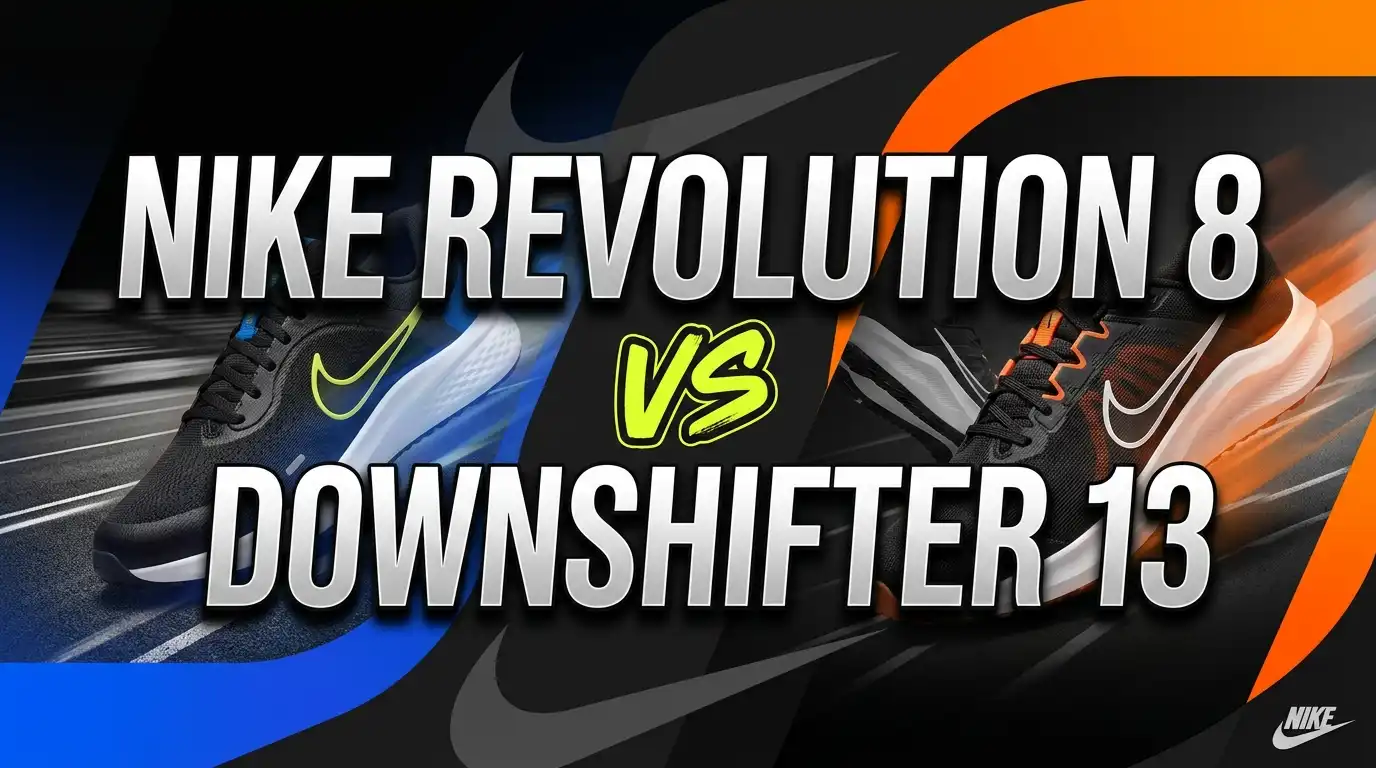
Are you stuck choosing between the Nike Revolution 8 and the Nike Downshifter 13? You are not alone. These two shoes sit at the top of Nike’s budget running lineup, and both cost under $75. They look similar. They weigh almost the same. They even share a 10mm heel-to-toe drop.
So how do you pick the right one? That is exactly what this post answers. By the end of this post, you will know which shoe matches your feet and your running style.
Whether you jog three times a week, walk daily, or need a solid gym shoe on a budget, one of these will serve you better than the other. Let’s break it all down.
Key Takeaways
- The Nike Revolution 8 weighs about 267g (9.4 oz) in lab tests and uses an EVA foam midsole with rocker geometry for a smooth ride. It offers better breathability through an upgraded mesh upper and flex grooves in the forefoot for a more natural stride.
- The Nike Downshifter 13 weighs around 276g (9.75 oz) and features a soft foam midsole with an internal fit band for midfoot support. It provides reliable rubber outsole traction and a slightly firmer cushioning feel. The Downshifter 13 also has reflective design details for low-light visibility.
- Both shoes share a 10mm heel-to-toe drop and fall into the neutral support category. Both retail around $65 to $75, making them two of the most affordable Nike running shoes on the market. The Revolution 8 edges ahead in cushioning and weight, while the Downshifter 13 wins on midfoot security and outsole durability.
- The Revolution 8 fits true to size for most runners, while the Downshifter 13 can run slightly small. Nike recommends ordering a half size up for the Downshifter 13. Both shoes work well for beginners, casual joggers, and everyday walkers who want Nike quality without the premium price tag.
Nike Revolution 8: Full Overview

- Mesh Upper: The mesh upper offers a comfortable, breathable feel.
- Foam Midsole: The foam midsole delivers intuitive cushioning through comfort-focused rocker geometry.

Last update on 2026-08-27 / Affiliate links / Images from Amazon Product Advertising API
The Nike Revolution 8 is the eighth version of Nike’s popular entry-level running shoe. It brings a lighter build and improved cushioning over the Revolution 7. The shoe weighs approximately 267g in a men’s size 9, which makes it about 6% lighter than its predecessor.
Nike used a new EVA foam midsole in this version. The midsole features comfort-focused rocker geometry that guides your foot through each stride. This design creates a smooth heel-to-toe transition. You feel less impact on your joints during longer runs or walks.
The upper is made of soft, breathable mesh that allows plenty of airflow. Nike also added touch points at the heel and tongue for easy on-and-off wear. The outsole includes flex grooves in the forefoot. These grooves let the shoe bend naturally with your foot.
The Revolution 8 retails at around $65 to $75. It comes in a wide range of colors for both men and women. This shoe suits beginners, daily walkers, and light joggers who want a comfortable and affordable option.
Pros:
- Very lightweight at 267g (9.4 oz)
- Smooth rocker geometry in the midsole
- Excellent breathability from the mesh upper
- True-to-size fit for most foot shapes
- Budget-friendly price under $75
Cons:
- Limited outsole rubber coverage may reduce long-term durability
- Not ideal for long-distance runs over 10K
- Minimal arch support for overpronators
- Outsole traction can feel slippery on wet surfaces
Nike Downshifter 13: Full Overview

- Breathable Upper: Soft and comfortable mesh offers breathability.
- Midfoot Support: Updated internal fit band offers containment around the midfoot for support and security.
Last update on 2026-08-27 / Affiliate links / Images from Amazon Product Advertising API
The Nike Downshifter 13 is the thirteenth edition of Nike’s Downshifter series. This shoe focuses on secure fit and reliable traction for everyday running. It weighs approximately 276g (9.75 oz) in lab conditions, making it slightly heavier than the Revolution 8.
The midsole uses a soft foam compound that cushions each step. The cushioning feels a bit firmer than the Revolution 8. This firmness gives the shoe a more stable, grounded feel during runs and walks.
One standout feature is the updated internal fit band. This band wraps around your midfoot and delivers a snug, secure ride. It keeps your foot locked in place during lateral movements and quick pace changes. The rubber outsole provides enhanced traction on various surfaces.
The Downshifter 13 also includes reflective design details. These small touches improve your visibility during early morning or evening runs. The breathable mesh upper keeps your feet cool, though it feels slightly less open than the Revolution 8’s mesh.
Pros:
- Internal fit band provides excellent midfoot security
- Rubber outsole offers strong, reliable traction
- Reflective details improve visibility in low light
- Good durability for daily use
- Removable insole allows custom orthotics
Cons:
- Slightly heavier than the Revolution 8
- Runs small; may need to order a half size up
- Firmer cushioning may not suit runners who prefer a soft ride
- Mesh upper is less breathable than the Revolution 8
- Energy return is lower than the Revolution 8
Cushioning Comparison: Which Shoe Feels Better Underfoot?
Cushioning is one of the biggest differences between these two shoes. The Nike Revolution 8 uses an EVA foam midsole with rocker geometry. Lab tests show it absorbs about 2.67 joules of energy at the heel. That is a solid number for a budget shoe.
The Nike Downshifter 13 absorbs about 2.36 joules at the heel. This means the Revolution 8 offers noticeably more cushioning with each step. If you run on hard pavement or concrete sidewalks, you will feel this difference in your knees and ankles over time.
The Revolution 8 also scores higher in forefoot cushioning. Its flex grooves and rocker design create a smooth, rolling sensation as your foot moves from heel strike to toe-off. The Downshifter 13 feels more flat and stable. Some runners prefer this because it gives them better ground contact.
If you value soft landings and joint protection, the Revolution 8 is the better pick. If you want a firmer, more stable platform, the Downshifter 13 delivers that experience. Your preference depends on your running style and the surfaces you run on.
Weight and Feel on Foot
Weight plays a big role in how a shoe feels during a run. The Revolution 8 clocks in at about 267g (9.4 oz) in lab measurements. The Downshifter 13 comes in at about 276g (9.75 oz). That is roughly a 9-gram difference per shoe.
Nine grams may sound small. But over thousands of steps during a 5K or 10K, it adds up. Lighter shoes reduce fatigue in your legs and feet. The Revolution 8 feels noticeably lighter on foot, especially during the second half of a run.
The Revolution 8 also has a more flexible forefoot. The flex grooves allow the shoe to bend easily with your foot. This flexibility creates a natural, barefoot-like sensation. The Downshifter 13 feels stiffer and more structured through the midfoot.
Both shoes feel comfortable for daily walking and casual jogging. But if you plan to run regularly and want a shoe that disappears on your foot, the Revolution 8 has the edge. The Downshifter 13 trades that light feeling for more structure and support.
Upper and Breathability
Both shoes use mesh uppers, but they perform differently in airflow and comfort. The Revolution 8 has an upgraded mesh that Nike says is more breathable than the previous Revolution 7. Air flows freely through the upper, keeping your feet cool during warm-weather runs.
The Downshifter 13 also features a breathable mesh upper, but it feels slightly denser. The internal fit band adds a layer of material around the midfoot. This extra layer improves fit but reduces airflow in that area.
If you run in hot climates or your feet tend to sweat, the Revolution 8 will keep you more comfortable. The open mesh design lets heat escape quickly. You will notice less moisture buildup inside the shoe after a 30-minute run.
The Downshifter 13’s upper holds your foot more securely. The fit band creates a locked-down feel that some runners prefer. This is a trade-off between breathability and fit security. The Revolution 8 wins on airflow. The Downshifter 13 wins on midfoot containment.
Outsole and Traction
The outsole tells you a lot about where and how well a shoe grips the ground. The Downshifter 13 has a full rubber outsole with a pattern built for reliable traction. It grips well on dry roads, gym floors, and even slightly damp surfaces.
The Revolution 8 uses a thinner outsole with flex grooves in the forefoot. These grooves improve flexibility but reduce the amount of rubber that contacts the ground. On dry surfaces, traction is fine. On wet or slick surfaces, the Revolution 8 can feel less grippy.
Durability also favors the Downshifter 13 in this category. More rubber on the outsole means the shoe wears down more slowly. If you run on rough pavement or gravel paths, the Downshifter 13 will last longer before showing significant outsole wear.
For treadmill running and indoor gym use, both shoes perform equally well. But for outdoor runners who face mixed conditions and rough terrain, the Downshifter 13 provides a more dependable grip. The Revolution 8 is better suited for smooth, dry roads and tracks.
Fit and Sizing
Getting the right fit matters more than any other feature. The Nike Revolution 8 fits true to size for most runners. Reviewers and users consistently report that their normal Nike size works perfectly in this shoe. The toe box has a standard width that suits most foot shapes.
The Downshifter 13 runs slightly small. Nike itself recommends ordering a half size up. Many users on Amazon and running forums confirm this. If you have wider feet or prefer extra toe room, you should size up for the Downshifter 13.
The Downshifter 13’s internal fit band adds a snug, secure feel around the midfoot. This is great for runners who want a locked-in sensation. But it also makes the shoe feel tighter. People with high arches or wide midfoot areas may find it restrictive.
The Revolution 8 offers a more relaxed, accommodating fit. The heel and tongue touch points make the shoe easy to slip on and off. If you prioritize comfort and a forgiving fit, the Revolution 8 is the safer choice. If you want a secure, race-day feel, the Downshifter 13 delivers.
Durability: Which Shoe Lasts Longer?
Durability depends on materials, construction, and how you use the shoe. The Downshifter 13 has more rubber on its outsole. This extra rubber protects the foam underneath and resists wear from rough surfaces. Runners report the Downshifter 13 holds up well after 300 to 400 miles.
The Revolution 8 uses less outsole rubber and relies more on exposed foam in certain areas. This design choice makes the shoe lighter and more flexible. But it also means faster wear on the bottom of the shoe, especially if you run on concrete or asphalt regularly.
The upper materials show similar durability between both shoes. Both mesh uppers resist tearing and hold their shape well over months of use. The stitching and overlays on both shoes appear solid and consistent.
If you plan to use your shoes primarily for walking, gym workouts, or light jogging, both will last a similar amount of time. But for dedicated road runners who put in serious weekly mileage, the Downshifter 13 offers a longer lifespan. The Revolution 8 may need replacement sooner.
Best Use Cases for Each Shoe
The Revolution 8 and Downshifter 13 excel in different situations. Knowing your primary activity helps you choose the right shoe.
The Revolution 8 is ideal for casual joggers, daily walkers, and gym-goers. Its soft cushioning and light weight make it a great option for 5K and 10K distances. It also works well as an all-day comfort shoe for people who stand or walk for extended periods.
The Downshifter 13 suits runners who want more structure and traction. It performs well on mixed surfaces and in varying weather conditions. The reflective details make it a smart pick for early morning or late evening runs. The internal fit band also makes it a solid choice for interval training and tempo runs.
Both shoes can serve as everyday sneakers. They pair well with casual outfits and offer all-day comfort. But neither shoe is built for trail running, marathon racing, or high-intensity sprinting. For those activities, you need a more specialized shoe from Nike’s performance lineup.
Style and Color Options
Both the Revolution 8 and Downshifter 13 come in a wide variety of colorways. Nike offers options for men and women in both shoes. You can find classic combinations like black and white, as well as bolder color options.
The Revolution 8 has a sleeker, more modern silhouette. Its clean lines and minimal overlays give it a contemporary look. Many users wear the Revolution 8 as a casual lifestyle shoe because of its stylish design. It transitions easily from a morning run to a coffee shop.
The Downshifter 13 has a slightly bulkier profile. The internal fit band and denser outsole add visual weight to the shoe. It looks more like a traditional running shoe. The reflective accents add a subtle tech-forward touch.
Both shoes look good with jeans, joggers, and athletic wear. If visual appeal and versatility matter to you, the Revolution 8 has a slight style advantage. But the Downshifter 13 still looks sharp and holds its own as an everyday sneaker.
Price and Value Comparison
Both shoes compete in Nike’s most affordable price tier. The Revolution 8 retails between $65 and $75. The Downshifter 13 also retails in the same range, typically around $65 to $75. Sales on Amazon and other retailers often drop both shoes below $55.
For the price, both shoes deliver excellent value. You get Nike branding, solid construction, and comfortable cushioning for less than $75. That is hard to beat in the running shoe market. Many competitors charge $100 or more for similar features.
The Revolution 8 offers better value for cushioning and lightweight comfort. The Downshifter 13 offers better value for durability and outsole grip. Your best value depends on what you prioritize.
If you find either shoe on sale, grab it. Both shoes punch well above their price point. They offer a genuine Nike running experience without the $150+ price tag of premium models like the Pegasus or Vomero.
Who Should Buy the Nike Revolution 8?
- Mesh Upper: The mesh upper offers a comfortable, breathable feel.
- Foam Midsole: The foam midsole delivers intuitive cushioning through comfort-focused rocker geometry.
Last update on 2026-08-27 / Affiliate links / Images from Amazon Product Advertising API
The Revolution 8 is perfect for a specific type of runner and walker. Choose this shoe if you want the lightest, most cushioned option in Nike’s budget lineup. It suits people who run on treadmills, smooth roads, and park paths.
This shoe also works well for people who stand or walk all day at work. The soft EVA foam and rocker geometry reduce fatigue during long hours on your feet. Nurses, teachers, and retail workers often appreciate this level of comfort.
If you are new to running and want a shoe that feels forgiving and comfortable from the first step, the Revolution 8 is your match. It does not demand a break-in period. You can lace up and go on day one.
Skip the Revolution 8 if you need maximum outsole durability, run on wet surfaces frequently, or prefer a firm, stable ride. For those needs, the Downshifter 13 is the better option.
Who Should Buy the Nike Downshifter 13?
- Breathable Upper: Soft and comfortable mesh offers breathability.
- Midfoot Support: Updated internal fit band offers containment around the midfoot for support and security.
Last update on 2026-08-27 / Affiliate links / Images from Amazon Product Advertising API
The Downshifter 13 is the right choice for runners who value fit security and outsole durability. The internal fit band locks your foot in place. The rubber outsole grips well and lasts longer than the Revolution 8’s outsole.
This shoe is great for interval training, tempo runs, and outdoor running in mixed conditions. The reflective details add safety for dawn and dusk workouts. The firmer cushioning provides a stable base for quick direction changes.
If you use custom orthotics or insoles, the Downshifter 13 accommodates them well. The removable insole makes it easy to swap in your preferred support. This feature is important for runners with specific foot conditions or arch needs.
Skip the Downshifter 13 if you prioritize lightweight comfort, maximum breathability, or a true-to-size fit without adjustments. The Revolution 8 handles those needs better. Remember to order a half size up if you choose the Downshifter 13.
Final Verdict: Nike Revolution 8 vs Downshifter 13
Both shoes deliver outstanding value for their price. But they serve different priorities. The Nike Revolution 8 wins on cushioning, weight, breathability, and overall comfort. It is the better shoe for casual joggers, walkers, and people who want a lightweight daily shoe.
The Nike Downshifter 13 wins on fit security, outsole traction, durability, and low-light visibility. It is the better shoe for structured training, outdoor running, and runners who need a locked-down midfoot feel.
There is no wrong choice here. Both shoes cost the same and come from Nike’s trusted lineup. Pick the Revolution 8 for comfort. Pick the Downshifter 13 for structure. Your feet will thank you either way.
FAQs
Is the Nike Revolution 8 Good for Walking?
Yes, the Nike Revolution 8 is excellent for walking. Its soft EVA foam midsole and rocker geometry reduce foot fatigue during long walks. The lightweight build means your legs stay fresh. Many Amazon reviewers specifically praise this shoe as a daily walking shoe.
Does the Nike Downshifter 13 Run True to Size?
The Downshifter 13 tends to run slightly small. Nike recommends ordering a half size up. Users with wider feet or higher arches should pay extra attention to sizing. Trying the shoe in store or ordering from a retailer with free returns is a smart approach.
Can I Use These Shoes for Gym Workouts?
Both shoes work for light gym workouts. They handle treadmill running, elliptical training, and casual weightlifting well. However, neither shoe is built for heavy lifting or CrossFit-style workouts. For those activities, a flat-soled training shoe provides better stability.
How Long Do the Revolution 8 and Downshifter 13 Last?
Both shoes last between 300 and 500 miles depending on your body weight, running surface, and stride. The Downshifter 13 typically lasts longer because of its thicker rubber outsole. The Revolution 8 may show outsole wear sooner, especially on rough pavement.
Which Shoe Is Better for Beginners?
Both shoes suit beginners well. The Revolution 8 is slightly better for brand-new runners because of its softer cushioning and more forgiving fit. The Downshifter 13 is a better pick for beginners who plan to train with structure or run in varying conditions. Either shoe provides a solid foundation to start your running journey.
Are These Shoes Good for Flat Feet?
Both shoes fall into the neutral support category. They do not include built-in stability features for flat feet or overpronation. If you have flat feet, you may benefit from adding aftermarket insoles. The Downshifter 13’s removable insole makes this swap easier than the Revolution 8.

Lipi is the founder and lead reviewer behind Fashion Reviewed. With a keen eye for quality, style, and value, she brings years of experience in fashion analysis and trend spotting to every review. Her passion for helping others discover amazing fashion finds drives the honest, detailed content you’ll find on this blog.